About Me
Welcome!
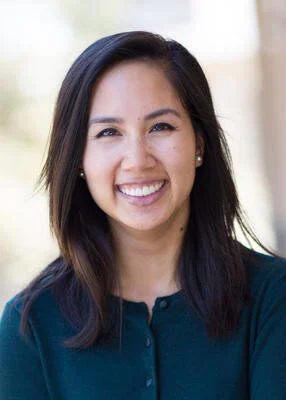
I’m Tu Hoang, a Licensed Marriage and Family Therapist (LMFT) and a Registered Play Therapist™ (RPT™) .
I specialize in experiential psychotherapy, with a particular focus on child counseling and play therapy.
My Story
From childhood through adulthood, life’s demands can dim our connection to ourselves and the world around us. I believe in creating space to pause—to step into awareness and notice the patterns that shape us. In this light, clarity emerges. When we allow ourselves room to reflect, explore, and be curious, we uncover truths that were once hidden—and from that insight, we can begin to shift intentionally.
Healing, like nature, moves in seasons. There are times of brightness and growth, and quiet seasons when not much seems to be happening on the surface. Even in dormancy, change is present. Sometimes the seeds of transformation are simply conserving energy, waiting for the right conditions to bloom. I honor it all: the stillness, the movement, and the cycles of light and dark that shape our inner landscapes.
My approach is creative and experiential—like art and nature, it moves you. My role is to guide you, providing a safe space to uncover what is ready to emerge, while holding space for what is still becoming.
Grounded in deep gratitude for the people I’ve had the privilege to walk alongside, I honor the ways we light up each other’s world. I’ve been invited into stories and trusted to witness both pain and power. Together, we’ve built tools, confronted trauma, and planted seeds of healing. It is an honor to be part of these journeys toward light and lightness—and I would be delighted to be part of yours.
Education & Training
My path to becoming a psychotherapist was not a straight one. In fact, psychology was not where I initially thought I was headed at all. I entered college intending to study aerospace engineering because, at the time, I believed aviation represented freedom—the possibility of movement, exploration, and a life that was not confined to one place. It did not take long for me to realize that aerospace engineering was not going to put me in the air in quite the way I had imagined. Somewhere along the way, my curiosity about flight gave way to a much deeper curiosity about people.
I changed my major to psychology, but I did not want to study psychology without also questioning the assumptions embedded within the field itself. As I moved through my undergraduate education, I became increasingly aware of how much of psychology had been developed and taught through predominantly Western, and often predominantly white, perspectives. I found myself asking questions about whose experiences were represented, whose were missing, and what happens when we apply one cultural framework to understand people whose lives and identities may be shaped by very different histories, communities, and values. That questioning ultimately led me to pursue not one, but two bachelor's degrees at the University of California, San Diego: one in Psychology and another in Socio-Cultural Anthropology.
Anthropology became an important complement to my psychological training because it gave me another lens through which to understand human behavior. People do not exist in isolation. Our development is shaped by family, culture, community, language, history, social expectations, relationships, and the environments in which we grow. I have carried that perspective with me throughout my clinical training and continue to believe that good psychotherapy requires more than understanding symptoms; it requires genuine curiosity about the person who is experiencing them.
My clinical education began even before graduate school, when I worked as an ABA therapist with children on the autism spectrum and their families. That experience gave me an early and very practical understanding of child development, behavior, learning, and the ways in which children communicate needs that they may not yet have the words to express. During the COVID-19 lockdown, I used that period to deepen this area of study through additional coursework in behavioral analysis at the University of California, Santa Barbara.
I completed graduate school at Santa Clara University, and my education did not end with the degree. From 2014 through 2020, I continued my clinical training at Stanford University through the Tuesday Group Trainings, where I studied and practiced cognitive behavioral therapy in an ongoing learning and consultation environment. That experience reinforced something that has remained important to me throughout my work as a psychotherapist: becoming a good clinician is not something that happens simply because one has completed graduate school. It is an ongoing process of learning, questioning, consulting, and refining how we understand and work with the people who trust us.
I continue to approach education in much the same way. My continuing education has intentionally reflected my commitment to cultural humility and to understanding people and families from perspectives beyond my immediate professional and geographic environment. I have pursued training in individual and child therapy from educators and clinicians in places as different as Australia and South Africa, and I continue to learn from psychologists, psychiatrists, physicians, and other professionals around the world. I read widely, consult regularly, and remain interested in approaches that challenge me to think differently.
For me, this ongoing education is not about collecting credentials. It is about remaining curious. It is about recognizing that no single theoretical orientation, profession, culture, or individual clinician has the complete answer to understanding another human being. My responsibility as a psychotherapist is to continue learning so that I can meet each person with openness, humility, knowledge, and flexibility.
That is also what I hope to bring into the therapy room. I am interested in the whole person—not simply the behavior that brought a family through the door. I want to understand what a child is communicating through their behavior, what a parent may be experiencing beneath their concerns, how a family system is functioning, and how culture and context shape the way each person understands themselves and one another.
Psychotherapy is a collaborative process, and fit matters. I do not believe that every therapist is right for every person, nor do I believe that every family will be the right fit for every therapist. If you have taken the time to read this carefully and find that my way of thinking and working resonates with you, I hope that something about my approach feels aligned with what you are looking for.
If you are looking for a psychotherapist who remains curious, questions assumptions, values cultural humility, takes continuing education seriously, and believes that understanding a person requires looking beyond the surface, we may be a good fit.
If this sounds like the kind of therapeutic relationship you have been looking for, I invite you to reach out. I would be glad to hear from you, learn a little about what brings you here, and talk with you about whether working together might be a good fit.